Water Coming Through My Flat Roof
Ik
Flat roofs are common in Cape Town, particularly in homes built from the 1960s through to the 1990s across suburbs like Pinelands, Bellville, Athlone, Rondebosch, and much of the Cape Flats. They're practical and low-profile, but they have one significant vulnerability: they rely entirely on a waterproofing system to keep water out.
On a pitched roof, gravity does most of the work. On a flat roof, water sits, pools, and looks for any weak point in the membrane. When that membrane fails, and over time it will, water finds its way through.
Why Flat Roofs Leak
Flat roofs aren't truly flat. They're designed with a slight fall to direct water towards drains or outlets. But even with a correctly designed fall, water spends more time in contact with the roof surface than it would on a pitched roof. This means the waterproofing membrane bears the full burden of keeping your home dry.
Several factors cause flat roof waterproofing to fail.
Age and General Deterioration
Most waterproofing products have a lifespan. Torch-on bitumen membranes typically last 10 to 15 years. Acrylic coatings may need reapplication every 5 to 8 years depending on the product and application quality. If your flat roof waterproofing hasn't been touched in more than a decade, it's working on borrowed time.
UV Damage
Cape Town receives high UV exposure year-round. UV radiation breaks down the polymers in waterproofing membranes, causing them to become brittle, crack, and eventually fail. This is why product selection matters. A membrane specified for Cape Town's climate will perform significantly better than a generic product.
Thermal Movement
Concrete and screed expand and contract with temperature changes. In Cape Town, where summer days can reach 35°C and winter nights drop well below 10°C, this thermal cycling puts repeated stress on the bond between the membrane and the substrate. Over time, the membrane lifts, bubbles, or separates at edges and joints.
Standing Water
If the drainage outlets on your flat roof are blocked or the fall has deteriorated, water pools on the surface. Standing water accelerates membrane deterioration and puts hydrostatic pressure on any existing weak points. Even a small blister or crack that would shed water quickly on a draining surface will allow significant water ingress when submerged.
Poor Workmanship on Previous Repairs
Flat roof repairs done without proper preparation, cleaning, priming, and correct product application, often fail quickly. A patch applied directly over a wet or contaminated surface, or a coating brushed over a membrane that has already separated from the substrate, will not hold. In many cases, poor repairs mask the true extent of the problem until it breaks through again elsewhere.
What the Warning Signs Look Like
Flat roof waterproofing doesn't always fail dramatically. Often the first signs are subtle:
- A stain or discolouration on the ceiling, particularly after rain, even if there's no active dripping
- A damp smell in the room below the flat roof section, especially after winter rain
- Paint bubbling or peeling on the ceiling
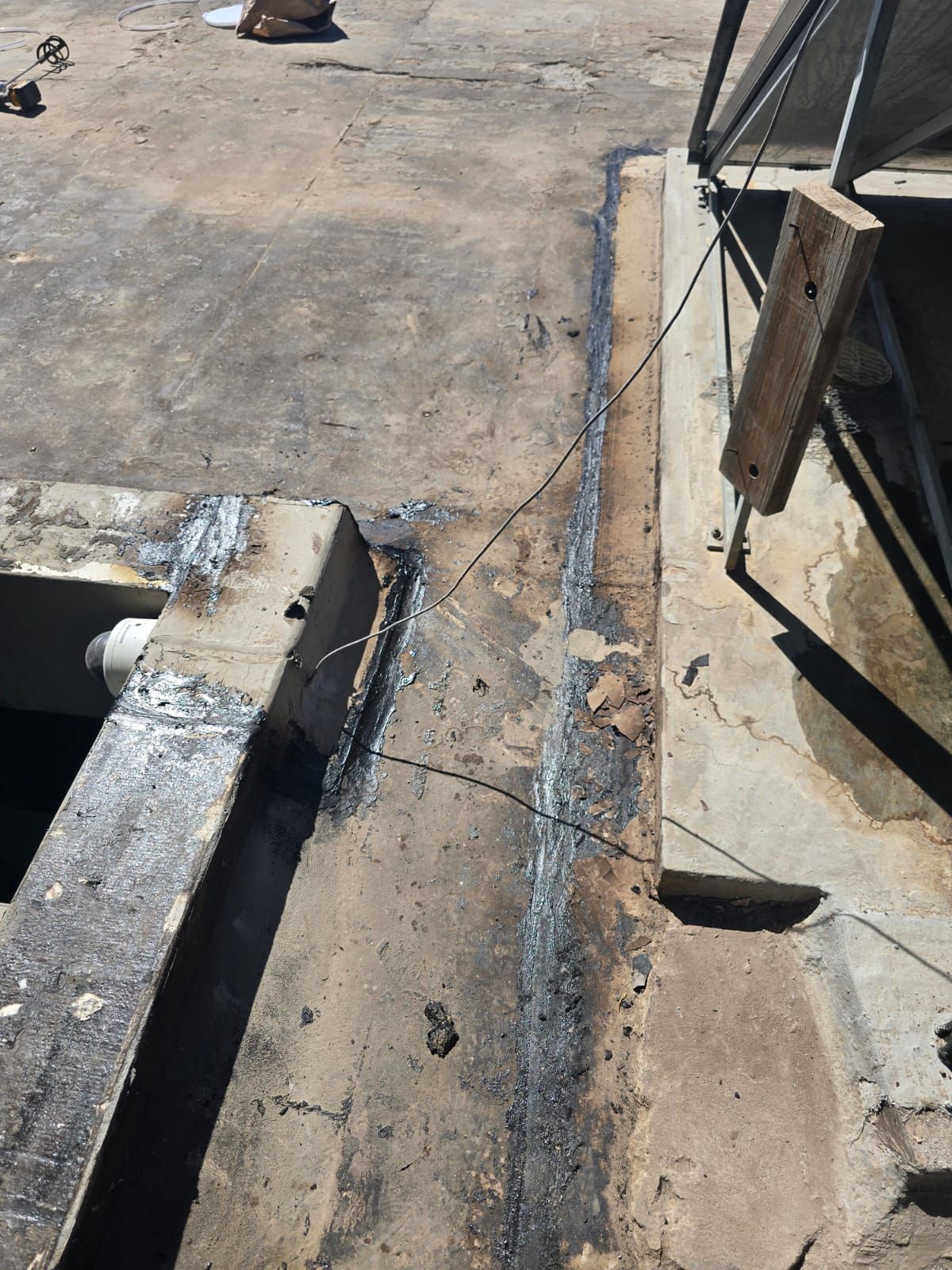
- Visible blistering, cracking, or separation on the roof surface if you can safely observe it from above
- Water pooling on the roof surface that doesn't drain within 24 hours of rain stopping
Any of these is a reason to arrange an inspection. The earlier a waterproofing failure is caught, the smaller the repair scope and the lower the cost.
What a Proper Flat Roof Waterproofing Repair Looks Like
The correct repair depends on the current condition of the roof, the substrate, and the extent of the failure. But any properly executed flat roof waterproofing repair will include the following.
Full Surface Assessment
Before any product is applied, a contractor needs to understand the full condition of the existing system. This means identifying all areas of membrane separation, blistering, and cracking, not just the obvious leak point. Treating a symptom without mapping the full extent of the failure leads to repeat leaks.
Surface Preparation
The existing surface must be clean, dry, and correctly primed before any new product is applied. If the existing membrane has separated from the substrate in large areas, it may need to be removed. Applying a new coating over a failed system is one of the most common causes of short-lived flat roof repairs.
Correct Product Specification
Different roof configurations, substrates, and drainage conditions require different waterproofing products. A bitumen torch-on system, a liquid-applied membrane, and a modified acrylic coating each have different performance characteristics. The right product needs to be specified for your specific roof.
Drainage and Fall Assessment
If standing water is contributing to the failure, addressing the waterproofing membrane alone won't solve the problem long-term. A proper repair includes assessing and clearing drainage outlets, and checking whether the fall is adequate.
What About DIY Flat Roof Repairs?
There are acrylic roof coatings and bitumen patches available at hardware stores in Cape Town, and for very small, clearly defined repairs, a crack around a drain outlet for example, a DIY approach may hold temporarily. But there are real limitations. Without surface preparation, most DIY products won't bond correctly and will fail within one or two seasons. It's difficult to identify the full extent of a membrane failure without experience and knowledge of what to look for. Applying a new coating over a compromised existing membrane can trap moisture and accelerate the deterioration of the substrate beneath.
For anything beyond a small cosmetic patch, a professional assessment will save you money in the medium term.
When to Get in Touch
If you're seeing any of the warning signs above, a stained ceiling, a damp smell, pooling water on the roof surface, or an active drip, don't wait for the next big rain event to make the call.
iKapa Waterproofing covers all areas across Cape Town, from the Southern Suburbs and the Atlantic Seaboard through to the Northern Suburbs and the Helderberg. We start every flat roof job with a thorough assessment, map the full condition of the existing system, identify all failure points, check drainage, and specify the right repair approach for that specific roof.